The global Non-Destructive Testing and Inspection Market has reached a critical inflection point in its industrial trajectory, establishing a validated base year valuation of USD 15.50 Billion in 2025. Driven by an escalating global mandate to secure aging critical infrastructure and deploy advanced materials across high stakes manufacturing sectors, this asset class is projected to scale aggressively, reaching a formidable valuation of USD 34.72 Billion by the end of the 2026 to 2035 forecast period. This expansion represents a robust compound annual growth rate of 8.4%, signaling a structural transformation in how industrial conglomerates approach asset lifecycle management, quality assurance, and catastrophic failure prevention. The sheer velocity of this capital expansion demands immediate executive attention, as corporate risk parameters increasingly intersect with mandated technological compliance. Operating at the foundational core of the global industrial value chain, the modern nondestructive testing ecosystem has transcended its legacy role as a localized quality control mechanism, evolving into an enterprise-wide digital intelligence engine. By seamlessly bridging the gap between physical material sciences and advanced data analytics, these inspection frameworks act as the ultimate safeguard for the aerospace, petrochemical, and power generation corridors. Institutional investors, sovereign wealth funds, and private equity syndicates are actively pouring immense capital into this specific corridor, recognizing that the integration of automated defect recognition and predictive structural health monitoring yields exceptional operational resilience and high margin recurring revenue streams. The overarching financial consensus is clear, positioning automated inspection and compliance technologies as highly defensible assets capable of generating sustained yield regardless of broader macroeconomic volatilities.
Beneath the surface of this robust valuation trajectory, a complex matrix of macroeconomic trends, technological disruptions, and sustainability mandates is fundamentally rewriting the operational blueprint of the industry. The most profound structural disruption is the rapid integration of artificial intelligence algorithms and autonomous robotic crawlers into traditional volumetric testing architectures. The commercial scale up of advanced drones, phased array ultrasonic testing, and industrial computed tomography has effectively decoupled inspection accuracy from human operational limitations, enabling unprecedented precision in detecting microscopic fractures within complex composite structures. However, this technological leap introduces highly volatile pricing dynamics and complex procurement lifecycles, as enterprise buyers must weigh the prohibitive initial capital expenditure required for advanced digital radiography systems against the long-term operational expenditure savings generated by reduced asset downtime. Compounding these equipment acquisition costs is the severe, persistent global shortage of certified level II and level III inspection technicians. This profound labor bottleneck is forcing heavy industries to accelerate their transition toward automated data centric systems that require less manual intervention, thereby reshaping vendor pricing power and service contract negotiations. Concurrently, shifting global regulatory frameworks, including stringent compliance updates from bodies governing pressure vessels and pipeline integrities, are mandating higher frequencies of high-resolution structural assessments. Sustainability pressures are equally acting as a massive macro driver, particularly the rapid phasing out of hazardous chemical film radiography in favor of environmentally sustainable digital imaging alternatives. The aggressive expansion of clean energy infrastructure, notably offshore wind turbine arrays and advanced nuclear decommissioning projects, requires specialized inspection protocols capable of functioning in extreme remote environments. Furthermore, underlying microelectronic supply chain frictions and geopolitical trade restrictions continue to introduce erratic lead times for specialized optoelectronic components, directly impacting the manufacturing cost structures of tier one hardware original equipment manufacturers and demanding highly agile supply chain navigation from global service providers.
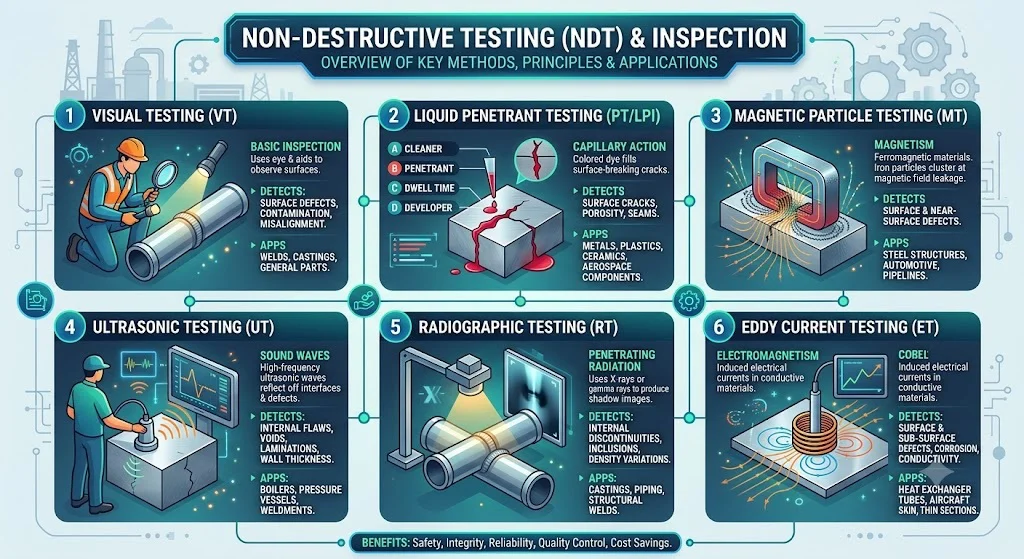
A granular deconstruction of the market reveals profound variances in segmentation depth and application profitability, illustrating that the broader capital influx is highly concentrated within specific technological and service-oriented domains. The inspection services segment commands the absolute largest share of the overarching revenue pool, driven by a deeply entrenched industrial preference for outsourced master service agreements and the prohibitive costs associated with maintaining internal certified inspection capabilities. Industrial asset operators prefer to transfer the risk and compliance liability to specialized third party contractors, ensuring a continuous stream of highly lucrative multi-year contracts for top tier service providers. Within the equipment segmentation, there is a stark profitability contrast between high volume legacy surface methods, such as magnetic particle and liquid penetrant testing, and technologically dense volumetric solutions. The market is witnessing a decisive capital pivot toward digital radiography and phased array ultrasonics, driven by their superior capacity to generate immutable digital audit trails and three-dimensional flaw visualizations. Furthermore, emerging downstream applications, particularly continuous structural health monitoring, are growing at a velocity that significantly outpaces the overall baseline market expansion. By embedding acoustic emission sensors and intelligent remote monitoring nodes directly into critical load bearing structures, asset owners are shifting from reactive inspection intervals to real time predictive diagnostic paradigms. This transition dramatically alters buyer behavior patterns, introducing a high degree of switching friction. Once a heavy industrial operator integrates a specific vendor proprietary software interface and automated defect recognition algorithms into their enterprise resource planning framework, the substitution risks plummet, locking clients into deeply integrated software as a service ecosystem that generate continuous data monetization opportunities for agile vendors.
The spatial realignment of production hubs and demand corridors illustrates a highly fragmented geopolitical battleground, where regional infrastructure maturities dictate the pace of technological absorption. North America currently dominates the global revenue matrix, functioning as the primary theater for advanced asset integrity management due to its rapidly aging oil and gas pipeline networks, extensive commercial aerospace manufacturing footprint, and heavily regulated nuclear power sector. The immediate requirement to extend the operational lifespan of legacy industrial infrastructure, combined with aggressive federal safety mandates, ensures that North American capital deployment remains aggressively focused on premium automated inspection hardware and advanced analytical software integration. Conversely, the Asia Pacific region represents the most explosive growth frontier, characterized by unprecedented state sponsored infrastructure investments, massive shipbuilding activities, and the rapid construction of next generation power generation facilities across prominent industrializing nations. The sheer volume of manufacturing output and the continuous modernization of domestic defense sectors demand scalable high throughput inspection mechanisms capable of supporting hyper accelerated production lines. Europe operates under a distinctly different set of macro variables, where the market is primarily driven by aggressive environmental sustainability targets and the complex inspection requirements of a rapidly transitioning automotive supply chain. European demand is heavily weighted toward non destructive evaluation of advanced lightweight composites utilized in electric vehicles and the structural verification of expansive offshore renewable energy grids. Meanwhile, the Middle East and Africa continue to represent a highly lucrative concentrated demand center for specialized downstream petrochemical and offshore rig inspections, heavily reliant on autonomous robotic systems capable of minimizing human risk in highly volatile high temperature operational environments. Navigating these disparate regional realities requires vendors to deeply localize their industrial policies and aggressively manage the impact of international tariff structures on the importation of highly specialized precision testing instruments.
Analyzing the structural positioning of top tier entities reveals an intensely competitive ecosystem defined by aggressive consolidation and strategic market maneuvering. Dominant market leaders are actively defending their entrenched market shares by pivoting away from pure hardware sales, rapidly executing targeted mergers and acquisitions to absorb niche software developers and artificial intelligence startups. This calculated consolidation strategy aims to create impenetrable comprehensive digital inspection ecosystems, where proprietary hardware is seamlessly paired with advanced data analytics platforms. By controlling the entire data lifecycle, from physical flaw acquisition to predictive maintenance modeling, these leading conglomerates are successfully elevating their pricing power thresholds and neutralizing the threat of hardware commoditization. Simultaneously, the ecosystem faces a rising highly disruptive threat from agile technology entrants specializing in unmanned aerial vehicles, remote subsea crawlers, and algorithmic defect recognition. These specialized disruptors bypass traditional legacy barriers by offering highly flexible subscription-based inspection architectures that appeal to cost conscious mid-sized industrial operators. As market consolidation intensifies, the operational realities for independent service contractors become increasingly precarious, forcing regional players into strategic joint ventures to achieve the geographic scale and technological depth required to compete for lucrative multinational enterprise master service agreements.
The critical operational risks of corporate inertia in this rapidly evolving landscape cannot be overstated, as margin erosion inevitably accelerates for organizations that fail to adapt their asset integrity frameworks to the realities of digitized predictive maintenance. Ignoring these overlapping technological shifts, labor shortages, and regulatory compliance mandates will expose industrial operators to catastrophic asset failures, severe financial liabilities, and devastating reputational damage. The strategic imperative demands an immediate calculated transition from manual reactive quality control toward fully integrated autonomous inspection networks. Successfully navigating these complex regional variances, volatile pricing indexes, and profound segmentation shifts requires far more than surface level market observation. It demands comprehensive vendor positioning grids, precise regional penetration metrics, and highly granular forecasting matrices which are all exhaustively mapped and critically analyzed inside the full syndicated global Non-Destructive Testing and Inspection Market industry research report.